- Do these insects truly cause damage in your yard?
- Which herbs have traditionally been used to repel them?
- Which products can help you in your organic
ant control efforts?
Is It Really Necessary?

Ants have a sweet tooth for honeydew, a substance secreted by insect pests such as aphids, scale and whitefly. Not content to take a "hunter-gatherer" approach to supplying themselves with honeydew, ants act as "farmers," herding around the insect pests that produce the honeydew. The herders protect these insect pests from predatory insects that would, otherwise, kill them.
Ant control, then, can be regarded as a measure to take against insect pests such aphids, scale and whitefly. Incidentally, as if the direct damage caused by these herded insect pests weren't sufficiently troubling to convince you that ant control is a legitimate concern, consider this: sooty mold, a fungus that often coats honeydew-stained plants, can damage a plant by depriving it of sufficient sunlight. Oh, and sooty mold turns ornamental plants into eyesores, too, by the way.
Now that you understand when and why it's necessary to take action, let's consider a few organic methods used to tackle the problem. Note also that, in addition to the organic tips discussed below, successes in organic ant control have been reported using everything from parasitic wasps to talcum powder
. Organic Ant Control With Companion Planting
As gardeners, I think we're enamored with the idea that the solution to one plant's problem may well lie in another plant. Indeed, companion planting has helped gardeners deal effectively -- and organically -- with pests for centuries. There are even companion-planting solutions for ant control. Specifically, the fragrance of certain herbs has been thought to repel certain insects, including ants. 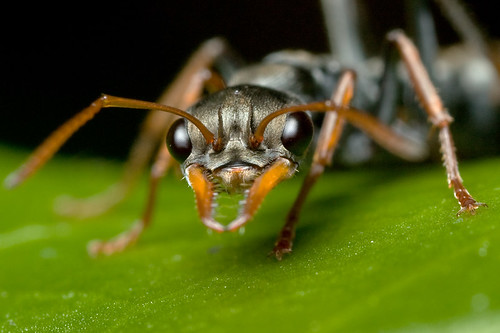 ," or you may suffer disappointment.
 Besides, the nice thing about companion planting is that, even if it fails, all you're "stuck" with (besides the insects you're fighting, that is) are some additional plants -- plants which you may end up liking so much for their ornamental value, etc. that you decide they're now must-haves for your yard (so you haven't wasted any money, at least).
Examples of Herbs Used in Organic Ant Control
Click on the links below to determine if lavender, sage, catnip or tansy might be plants you'd be interested in trying for organic ant control:In experimenting with herbs for organic ant control, remember that you have some leeway in terms of exactly how you use the plants. This is an important consideration when you realize that tansy, for example, can be among the worst invasive plants. So note carefully that you don't necessarily have to plant the herbs for organic ant control around your specimen plants.
Instead, you can harvest the leaves from the herbs (grown elsewhere), then simply strew the leaves around a specimen plant. If you suspect a plant to be overly aggressive, plant it in a raised bed, where you have more control over it. Remember, too, that you would be targeting only specimen plants susceptible to aphids, scale and whitefly when employing this ant control method.
Organic Ant Control Products
"But," perhaps you object, "I don't have time to experiment with traditional methods of ant control. Is there an organic product that I can buy in stores or on the Web?" Fortunately, for the committed modernist, yes, there are organic products sold for getting rid of ants.One such ant control product is the Tree Tanglefoot Pest Barrier
, an organic paste composed primarily of sticky substances (waxes and resins) that act as a sort of "fly paper" for ants. Another is Orange Guard, which functions as both a repellent and an insecticide for getting rid of ants. Its active ingredient (d-Limonene) is organic: orange peel extract. Eco Exempt IC-2 is another organic insecticide for ant control, being composed of mineral, wintergreen and rosemary oils. Final Thought on Getting Rid of Ants
In closing, let's return to my initial question of whether it's necessary to get rid of ants, at all. I stated essentially that controlling aphids, scale and whitefly entails, in part, controlling ants. But the corollary of this conclusion (vis-a-vis the health of your specimen plants, at least) is that if you do not have a problem with aphids, scale or whitefly, then you may not have to worry about getting rid of ants, either: many ants are, in themselves, harmless.So don't overdo it! In defense of ants, your Mr. Know-It-All would have been correct to point out that ants do prey on certain insect pests. Ant control can be counterproductive when practiced blindly.
If only ants didn't have such a sweet tooth! Source: http://landscaping.about.com/od/pestcontrol/Organic_Pest_Control_for_lnsect_and_Rodent_Garden_Pests_.htm
Get helpful information like how to properly trim your trees. Great tips from professional Arborists.

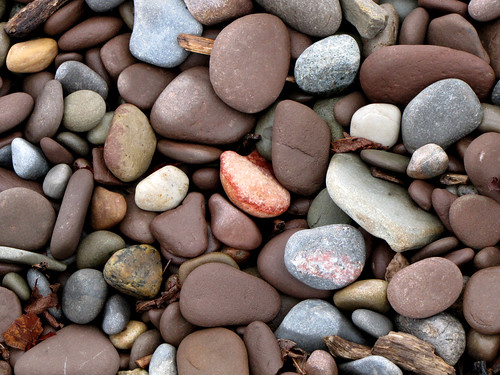
 . Most landscape designers tend to match landscape materials with the materials used in the home though some people do choose landscape materials regardless of the fact that these materials do not compliment the materials already used in the home.